Best Time to Visit the Outer Banks Lighthouses
Discover the best time to visit the Outer Banks lighthouses, with helpful tips on seasons, weather, lighting, and crowds so you can plan the perfect OBX lighthouse trip.
TRAVEL TIPS
Jim Kernodle
3/20/20263 min read
Best Time to Visit the Outer Banks Lighthouses
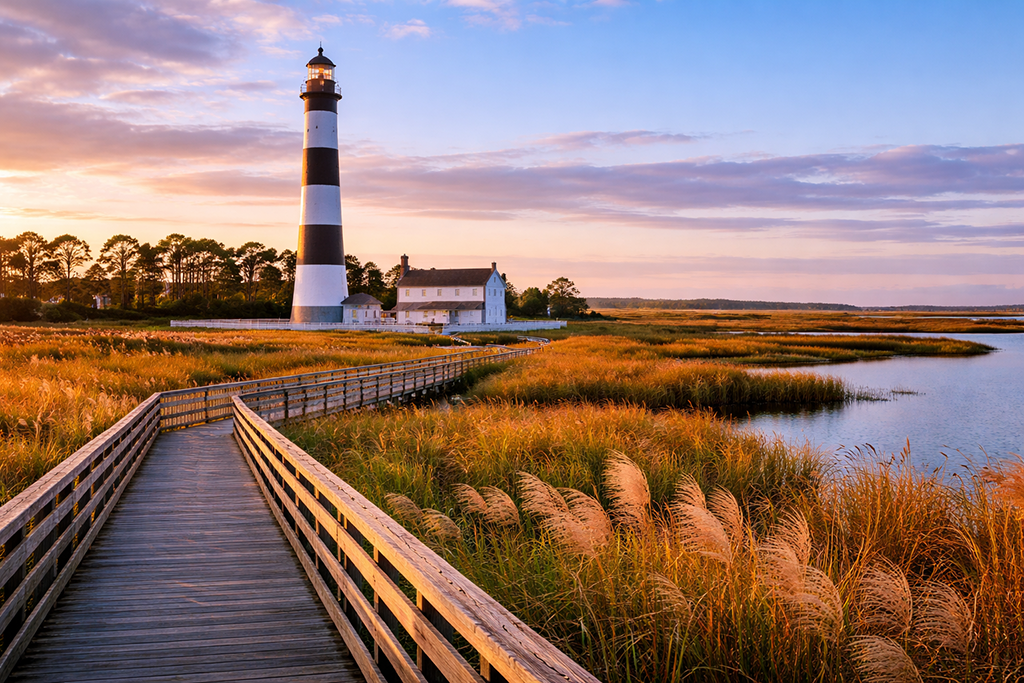
If you are planning a lighthouse trip to the Outer Banks, the best time to visit is usually fall, with late spring as another excellent choice. Fall stands out because the weather stays mild, the summer crowds begin to thin, and local tourism guidance specifically notes that many locals consider it the best season to visit the Outer Banks. Spring is also appealing because temperatures are cooler than summer and crowds are generally lighter.
Fall: The Best Overall Season
For many visitors, fall offers the most balanced Outer Banks lighthouse experience. Official tourism information says the weather remains mild into late December and that crowds lessen after summer. The same tourism sources also highlight pleasant air and water temperatures in fall and note that the skies lose some of their summer haze, which can make the scenery feel especially crisp and memorable. That combination makes fall ideal for sightseeing, photography, and enjoying the lighthouse grounds without the peak-season rush.
Spring: A Great Choice for Mild Weather and Lighter Crowds
Spring is another strong season for visiting the Outer Banks lighthouses, especially for travelers who prefer cooler temperatures and a more relaxed pace. The Outer Banks Visitors Bureau describes spring as a great time to visit because temperatures are cooler and crowds are a bit lighter. For lighthouse visitors, that can mean more comfortable walking, easier parking, and a calmer experience at nearby beaches, boardwalks, and historic sites.
Summer: Best for Convenience, but Also the Busiest
Summer is the most convenient season for many families because attractions are active, the weather is typically warm, and travel services are in full swing. At the same time, official tourism information says summer is by far the busiest season on the Outer Banks. Average temperatures are usually in the low 80s, and the islands fill with vacationers. That does not make summer a bad time to visit the lighthouses, but it does mean you should expect more traffic, more people, and less flexibility if you want quiet photo opportunities.
Winter: Quiet and Peaceful, but More Limited
Winter can be beautiful if you want solitude. The tourism board describes winter as a peaceful season with empty beaches and a more relaxed atmosphere. However, winter is usually better for scenic viewing than for a full lighthouse-climbing trip, because some restaurants and small shops close seasonally, and lighthouse access can be more limited depending on the site and current operations.
Best Lighting for Lighthouse Photos
When it comes to lighting, early morning and late afternoon are often the most rewarding times to photograph the Outer Banks lighthouses. The region is well known for its sunrises and sunsets, and Outer Banks tourism content regularly features these times of day as standout scenic moments. Fall can be especially attractive for photography because official tourism content notes that the skies lose some of their summer haze, which can help views look clearer and more dramatic.
Crowds: When It Feels Most Relaxed
If avoiding crowds is important, fall and spring are your best choices. Summer brings the heaviest visitation, while fall offers lighter crowds with comfortable weather. Winter is the quietest season overall, but it may not give you the fullest lighthouse experience if your goal is to climb multiple towers or pair your trip with lots of nearby shops and attractions.
Weather: What to Expect
Weather matters when planning a lighthouse visit because wind, storms, heat, and humidity can affect both comfort and access. NPS guidance for Bodie Island notes that lighthouse climbs can be hot, humid, and strenuous, and that high winds can affect balcony access. The Currituck Beach Lighthouse also notes that it operates weather permitting and may close for thunder or big storms. In other words, the best weather for lighthouse touring is usually the mild, more comfortable weather often found in spring and fall.
A Practical Note on Climbing Season
If your goal is not just to see the lighthouses but to climb them, timing matters. As of 2026, NPS says Bodie Island Lighthouse is open for climbing from late April to mid-October, while the Currituck Beach Lighthouse lists a 2026 season from March 21 through November 30, weather permitting. NPS also says the Cape Hatteras Lighthouse is closed for climbing in 2026 because of restoration work. Because access can change, it is smart to check official lighthouse websites before finalizing your trip.
Final Thoughts
For most travelers, the best time to visit the Outer Banks lighthouses is fall, when you get mild weather, thinner crowds, and beautiful seasonal light. Late spring is another excellent option if you want cooler temperatures and a quieter trip before peak summer. Summer works well for convenience and family travel, while winter is best for peaceful sightseeing rather than a full climbing-focused itinerary. If you want the best overall mix of weather, views, and comfort, aim for spring or fall, and plan your lighthouse photos for the softer light of morning or late afternoon.