Bodie Island Lighthouse
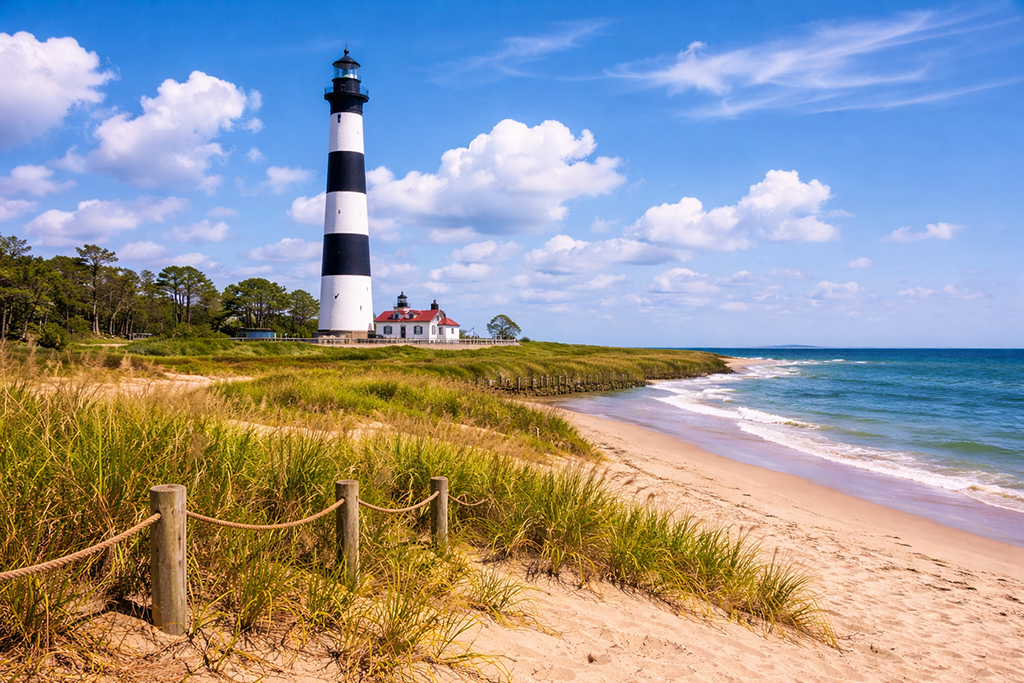
The Bodie Island Lighthouse is one of the most iconic landmarks in the Outer Banks, but the tower visitors see today is actually the third lighthouse built for this stretch of North Carolina coast. Located near Nags Head within Cape Hatteras National Seashore, the lighthouse stands as a reminder of how dangerous these waters once were for passing ships and how important navigational beacons were to coastal travel and trade.
The story began in the 1830s, when the federal government recognized the need for a lighthouse near Bodie Island because so many vessels were being lost along this part of the coast. After delays in land acquisition and construction, the first lighthouse was completed in the late 1840s. That original 54 ft. tall brick tower, however, was built on a weak foundation and soon began to lean. By the 1850s, the structure was beyond repair and had to be abandoned.
Bodie Island Lighthouse History
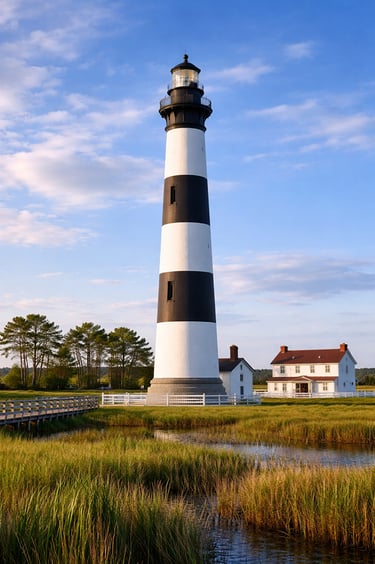
Bodie Island Lighthouse, Built in 1872.
How shifting sands, war, and engineering lessons shaped one of the Outer Banks’ most recognizable landmarks
The Rebuilding of the Bodie Island Lighthouse
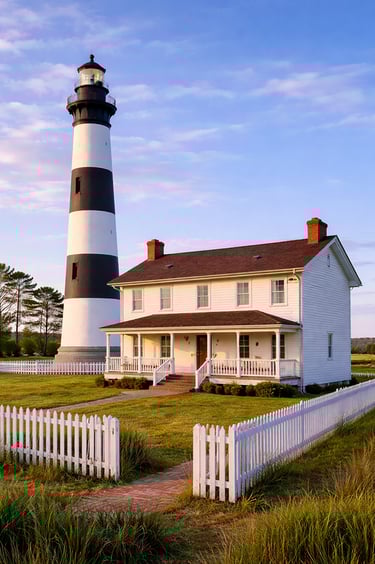
Bodie Island Lighthouse Keeper's Home.
A second lighthouse was 80 ft. tall and completed in 1859 with a stronger foundation and a third-order Fresnel lens that greatly improved visibility offshore. Even so, this replacement did not last long. During the Civil War, Confederate forces destroyed the tower in 1861 so it could not be used by Union troops as a lookout point. For years afterward, this section of coastline was left without a guiding light.
The current Bodie Island Lighthouse is 156 ft. tall and was built farther north on a more secure site after repeated concerns from ship captains and mariners. Construction began in 1871 on a 15-acre tract, and the new tower first displayed its light on October 1, 1872. At 156 feet tall, it was the strongest and most successful version yet, built with brick, granite, cast iron, and a much more stable foundation system.
One of the most remarkable features of the present lighthouse is its first-order Fresnel lens. This powerful lens helped project the light far out to sea and made the beacon easier for mariners to identify. Over time, the lighting system evolved from oil to electricity, and the lighthouse was electrified in 1932. By the 20th century, automation gradually reduced the need for keepers to live and work on site full time.
Like many Outer Banks landmarks, the Bodie Island Lighthouse reflects both human determination and the challenges of the coastal environment. The first two towers were lost to poor ground conditions and war, but the third tower endured. Its distinctive black-and-white horizontal bands, historic keepers’ quarters, and preserved setting make it one of the most photographed and appreciated lighthouses in North Carolina today. The tower underwent major rehabilitation from 2009 to 2012 and reopened for climbing in 2013, helping a new generation connect with its history.
Today, Bodie Island Lighthouse is more than a scenic stop on the way through the Outer Banks. It is a symbol of maritime history, coastal engineering, and the long effort to protect ships along the “Graveyard of the Atlantic.” For visitors exploring the Outer Banks, learning the history of Bodie Island Lighthouse adds deeper meaning to every view of its towering beacon across the marsh.
Enduring Legacy of the Bodie Island Lighthouse
Bodie Island Lighthouse
8210 Bodie Island Lighthouse
Nags Head, NC 27959
Hours
9:15am - 5:00pm
Contacts
252-728-2250
Bodie Island Lighthouse is open for climbing from late April through October 12, 2026.
FAQ
Frequently Asked Questions
When was the Bodie Island Lighthouse built?
The current Bodie Island Lighthouse was completed in 1872. It is the third lighthouse built for this area of the Outer Banks.
How tall is the Bodie Island Lighthouse?
The Bodie Island Lighthouse stands about 156 feet tall, making it one of the most recognizable lighthouses in North Carolina.
Why were there multiple Bodie Island lighthouses?
The first lighthouse developed structural problems because of an unstable foundation, and the second lighthouse was destroyed during the Civil War. The current tower was built on a stronger site with improved engineering.
Why is Bodie Island Lighthouse painted black and white?
Its bold black-and-white horizontal stripes help distinguish it from other lighthouses along the North Carolina coast. This pattern made it easier for mariners to identify during daylight hours.
What is the Bodie Island Lighthouse lens?
The lighthouse is known for its first-order Fresnel lens, a powerful lens design that helped project light far out over the Atlantic and improve navigation for ships.
Was the Bodie Island Lighthouse important to ships?
Yes. The lighthouse was built to help guide ships through the dangerous waters off the Outer Banks, an area often called the Graveyard of the Atlantic because of its many shipwrecks.
Where is Bodie Island Lighthouse located?
Bodie Island Lighthouse is located near Nags Head, North Carolina, within Cape Hatteras National Seashore on the Outer Banks.
Can visitors still see Bodie Island Lighthouse today?
Yes. Bodie Island Lighthouse is a popular historic attraction in the Outer Banks, and visitors can enjoy its scenic setting, learn about its history, and photograph one of the region’s most famous landmarks.
What makes Bodie Island Lighthouse historically important?
Its history reflects the challenges of coastal navigation, shifting landscapes, war, and engineering improvement. It remains an important symbol of Outer Banks maritime heritage.