The Ultimate Guide to Visiting the Outer Banks Lighthouses
Explore the iconic lighthouses of the Outer Banks, from Currituck Beach to Ocracoke, and discover the history, scenery, and travel tips that make each one worth visiting.
OUTER BANKS LIGHTHOUSES
Red Rhyder
3/6/20265 min read
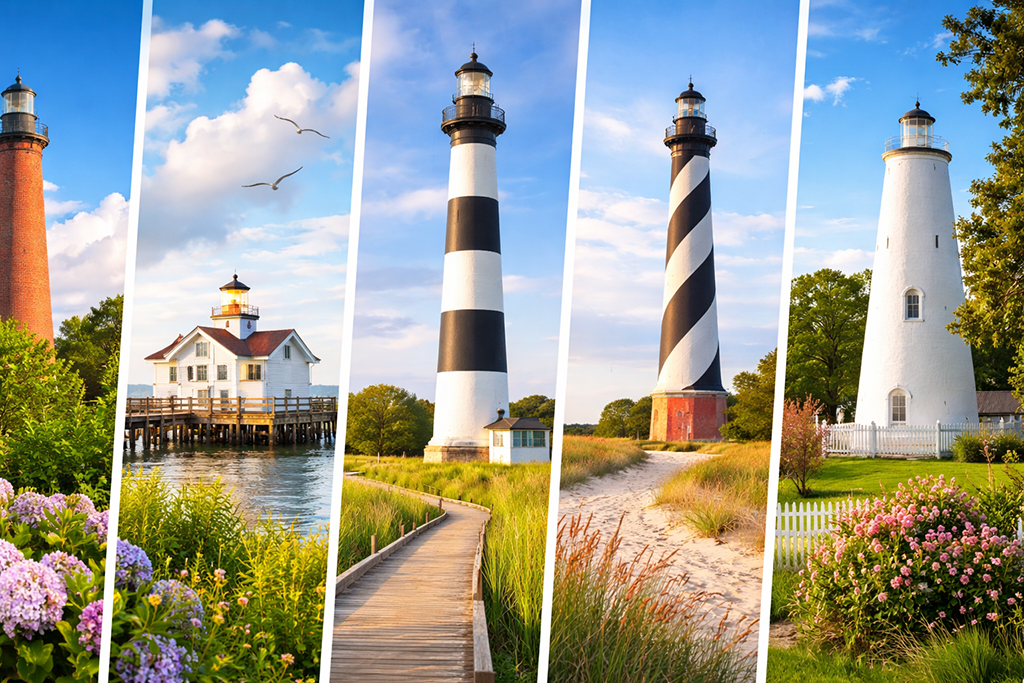
The Outer Banks is home to some of the most recognizable lighthouses on the East Coast. Scattered along the barrier islands, these historic beacons have guided sailors for generations and remain some of the most popular places to visit in coastal North Carolina. For travelers today, they offer much more than history alone. Each lighthouse has its own setting, personality, and story, from quiet waterfront views to dramatic oceanfront scenery.
Whether you are planning your first trip or building a sightseeing itinerary for your next vacation, visiting the Outer Banks lighthouses is one of the best ways to experience the character of the coast.
How many lighthouses are in the Outer Banks?
The Outer Banks is known for six main lighthouses:
Each one is unique in appearance, location, and visitor experience. Some are tall and commanding, while others are smaller and more cottage-like. Together, they tell the story of life along a coastline that has long been both beautiful and challenging for mariners.
Currituck Beach Lighthouse
Located in Corolla, the Currituck Beach Lighthouse is famous for its natural red-brick exterior. Unlike many lighthouses that were painted for visibility, this one was left unpainted, giving it a distinctive look that stands out immediately. The lighthouse rises above the trees and historic village area, making it one of the most memorable stops in the northern Outer Banks.
Visitors love Currituck Beach Lighthouse for its classic appearance and beautiful grounds. The surrounding village adds even more charm, with nearby historic buildings, shops, and walkable areas that make it easy to turn a lighthouse visit into a relaxing half-day outing.
Roanoke Marshes Lighthouse
In Manteo, Roanoke Marshes Lighthouse offers a very different experience. Instead of a tall coastal tower, this lighthouse is a replica of a screw-pile lighthouse and resembles a small waterfront cottage. Set at the end of a wooden pier in Shallowbag Bay, it has a peaceful and inviting setting that feels perfect for a leisurely stroll.
Inside, visitors can explore exhibits related to local maritime history. Though modest in size, Roanoke Marshes Lighthouse is rich in character and offers a closer look at a style of lighthouse once used to guide traffic through sounds and inland waterways.
Bodie Island Lighthouse
Bodie Island Lighthouse is one of the most photographed lighthouses in the Outer Banks. Located south of Nags Head, it is known for its striking black-and-white horizontal stripes and scenic marsh surroundings. The view from the boardwalk and viewing area is especially beautiful, often with reflections in the water that make the lighthouse even more dramatic.
This lighthouse is a favorite for visitors who want a classic Outer Banks photo stop. Its location also makes it an easy addition to a day of exploring nearby beaches, wildlife areas, and scenic drives.
Cape Hatteras Lighthouse
Cape Hatteras Lighthouse is perhaps the most famous lighthouse in the Outer Banks. Its bold black-and-white spiral pattern makes it instantly recognizable, and its towering height gives it a commanding presence. Located on Hatteras Island, it stands as a symbol of the region’s maritime history and the dangerous offshore waters once known as the Graveyard of the Atlantic.
A visit here feels iconic. The lighthouse grounds are impressive, and the surrounding area has a wide-open coastal beauty that many visitors remember long after their trip. For many travelers, Cape Hatteras is the must-see lighthouse of the entire Outer Banks.
Cape Lookout Lighthouse
Cape Lookout Lighthouse is one of North Carolina’s most distinctive coastal landmarks, known for its striking black-and-white diamond pattern and remote island setting. Standing on South Core Banks within Cape Lookout National Seashore, the lighthouse has long served as a recognizable beacon along a stretch of shoreline shaped by wind, waves, and maritime history. Its bold daymark was designed to help sailors identify the tower during daylight, and today it remains one of the most photographed and memorable lighthouses on the Carolina coast.
What makes Cape Lookout especially appealing to visitors is the sense of adventure that comes with seeing it. Surrounded by wide beaches, natural beauty, and an unspoiled coastal landscape, the lighthouse offers a very different experience from more easily reached mainland attractions. A visit here feels peaceful, scenic, and deeply connected to the maritime heritage of the Crystal Coast, making Cape Lookout Lighthouse a favorite stop for travelers who appreciate both history and the wild beauty of the North Carolina shore.
Ocracoke Lighthouse
Ocracoke Lighthouse is the southernmost of the five and has a simpler, more understated design than some of the others. Its clean white exterior and small-town setting give it a quiet charm that feels very different from the dramatic profile of Cape Hatteras.
Because Ocracoke itself has a slower pace and a unique island atmosphere, visiting this lighthouse is often part of a fuller experience that includes ferry travel, village exploration, and time spent enjoying one of the most distinctive communities on the Outer Banks.
What makes each lighthouse special?
Part of what makes lighthouse touring in the Outer Banks so enjoyable is how different each stop feels. You are not just seeing five versions of the same landmark. You are seeing five different pieces of coastal history.
Currituck Beach feels stately and historic. Roanoke Marshes feels intimate and charming. Bodie Island feels scenic and photogenic. Cape Hatteras feels bold and legendary. Ocracoke feels peaceful and timeless.
That variety is what makes a lighthouse-focused trip so rewarding.
Tips for planning your lighthouse trip
If you want to visit several lighthouses during one vacation, it helps to plan by region. Currituck Beach, Roanoke Marshes, and Bodie Island are often easier to group together depending on where you are staying. Cape Hatteras and Ocracoke usually require more driving and, in Ocracoke’s case, ferry planning as well.
It is also a good idea to bring comfortable shoes, water, sunscreen, and a camera. Even when you are not climbing a lighthouse, you will likely spend time walking boardwalks, paths, piers, and surrounding grounds. Morning and late afternoon are often the best times for photos, especially in summer when midday light can be harsh.
Take a look at the Outer Banks Travel Guide for the 2026 season with a great list for contacts to hotels, motels, bed & breakfasts, rental homes, condos and restaurants.
Best time to visit the Outer Banks lighthouses
Spring, summer, and fall are all popular times to visit. Summer brings the busiest crowds but also long days and warm weather. Spring and fall can be especially enjoyable if you prefer milder temperatures and a quieter experience. No matter the season, lighthouse visits are a great way to add history, scenery, and local character to your trip.
Why Outer Banks lighthouses are worth visiting
The lighthouses of the Outer Banks are more than historic landmarks. They are part of the region’s identity. They connect visitors to stories of shipwrecks, navigation, coastal communities, and preservation. They also happen to be some of the most beautiful places to stop, photograph, and explore.
For some travelers, visiting one lighthouse is enough. For others, seeing all five becomes a memorable adventure across the islands. Either way, these beacons offer a deeper appreciation for the landscape and history that make the Outer Banks so special.
If you are planning a trip to the North Carolina coast, make room on your itinerary for the lighthouses. They are some of the most rewarding and iconic stops you can make.