Ghost Stories and Legends of the Outer Banks Lighthouses
Explore ghost stories and legends of the Outer Banks lighthouses, including Bodie Island and Cape Hatteras, and discover the folklore behind these iconic coastal landmarks.
OUTER BANKS LIGHTHOUSES
Jim Kernodle
3/25/20266 min read
Ghost Stories and Legends of the Outer Banks Lighthouses
From shipwreck lore to eerie coastal legends, discover the mysterious side of the Outer Banks lighthouses while exploring the history, beauty, and folklore that make these landmarks unforgettable.
The Outer Banks is known for its windswept beaches, historic lighthouses, and unforgettable coastal beauty. But beyond the sunrises, ocean views, and postcard-worthy scenery, this stretch of North Carolina shoreline also carries a more mysterious reputation. For generations, visitors and locals alike have shared stories of ghostly sightings, strange sounds, lost ships, and legends tied to the sea.
It is easy to understand why. The Outer Banks has long been shaped by storms, isolation, shipwrecks, and the powerful Atlantic Ocean. These elements have helped create not only a fascinating maritime history, but also a rich tradition of folklore. Around the lighthouses of the Outer Banks, those stories feel especially strong. Standing tall against the sky, these beacons were built to guide sailors to safety, yet they also watched over some of the most dangerous waters on the East Coast.
In this article, we are exploring the ghost stories and legends of the Outer Banks lighthouses, with a focus on the folklore surrounding Bodie Island Lighthouse, Cape Hatteras Lighthouse, and the wider coastal region. These stories are best enjoyed as part of the local character and mystery of the Outer Banks — not always as proven history, but as memorable legends that continue to capture the imagination.
Why Lighthouse Legends Belong in the Outer Banks
Some places almost seem made for storytelling, and the Outer Banks is one of them. Long before modern navigation, these barrier islands were known for shifting sands, sudden storms, and treacherous waters. The coastline became famous for shipwrecks, earning the region its haunting nickname: the Graveyard of the Atlantic.
Lighthouses were built to bring order, warning, and hope to that danger. Yet there is something naturally dramatic about them. A lighthouse often stands alone against the horizon, surrounded by wind, surf, marsh, and darkness after sunset. It is not hard to see how people began connecting them with mystery. Add in generations of sailors’ tales, whispered local legends, and the emotional weight of lives lost at sea, and the result is a landscape filled with stories.
That is part of what makes Outer Banks lighthouse travel so appealing. Visitors do not just come for the views. They come for the feeling of standing in a place where history, nature, and folklore all meet.
Bodie Island Lighthouse: Beauty, Isolation, and Local Lore
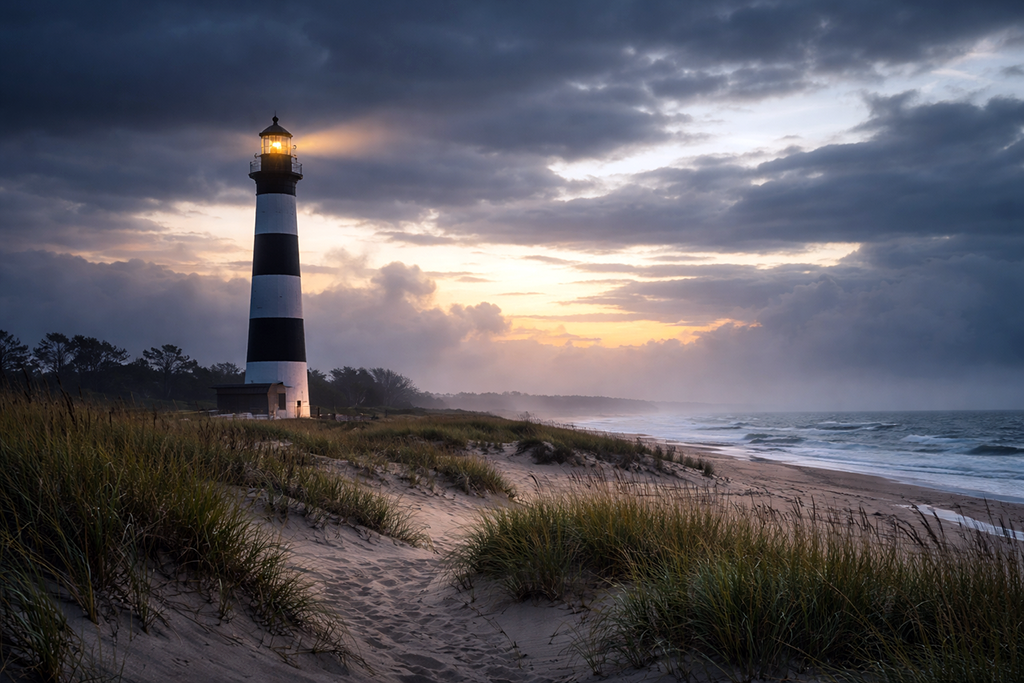
Bodie Island Lighthouse is one of the most recognizable landmarks in the Outer Banks. With its bold black-and-white horizontal stripes and scenic marsh surroundings, it is a favorite stop for visitors exploring the Cape Hatteras National Seashore. During the day, it feels peaceful and elegant. In the early morning or at dusk, however, the mood can shift completely.
The marshes around Bodie Island have a quiet, atmospheric beauty that easily inspires imagination. Mist rising over the water, still air, distant bird calls, and the silhouette of the lighthouse can create a setting that feels almost otherworldly. It is this mood, combined with the isolated coastal landscape, that has given rise to local ghost stories and eerie impressions over time.
Some visitors speak of the area as feeling unusually still or mysterious, especially in low light. Others are drawn to the old idea that places marked by danger and loss often collect stories that linger long after the events themselves have passed. While many Bodie Island tales are more atmospheric than specific, that may be part of their charm. It is less about one famous ghost and more about the feeling of the place itself — quiet, dramatic, and full of history.
For many travelers, Bodie Island Lighthouse represents the softer side of Outer Banks folklore. Its beauty makes it inviting, while its setting gives it just enough mystery to leave a lasting impression.
Cape Hatteras Lighthouse: Legends Along a Wild Coast
If any lighthouse feels connected to the dramatic spirit of the Outer Banks, it is Cape Hatteras Lighthouse. Famous for its striking black-and-white spiral design, this iconic beacon stands near one of the most storied stretches of coastline in North Carolina. The waters off Cape Hatteras have long been feared by mariners, and that history has naturally inspired legends.
The cape has seen storms, shipwrecks, and the kind of maritime danger that easily becomes folklore. Over time, stories of ghost ships, lost sailors, and unexplained lights have become part of the atmosphere surrounding the area. Even when these tales are impossible to verify, they reflect a real truth about Cape Hatteras: it is a place shaped by both beauty and risk.
Visitors often describe Cape Hatteras as powerful and unforgettable. The landscape feels bigger, rougher, and more exposed than many other beach destinations. The winds can be stronger, the ocean more dramatic, and the history heavier. That combination makes the lighthouse a perfect center for storytelling.
Ghost stories connected to Cape Hatteras often draw from the sea itself. Rather than focusing only on the tower, the legends seem to stretch outward into the surf, the horizon, and the memory of ships that never made it safely home. That maritime mystery gives Cape Hatteras a deeper emotional pull and makes it one of the most fascinating places to explore in Outer Banks folklore.
Ocracoke, Pirate Lore, and the Broader Lighthouse Mythos
No discussion of Outer Banks legends would feel complete without looking beyond the lighthouses themselves. The wider region is filled with folklore, and nearby Ocracoke is especially famous for it. Pirate stories, ghostly ship tales, and legends tied to Blackbeard all help create a larger coastal mythology that blends naturally with lighthouse history.
Even when a specific legend is not attached directly to a lighthouse, the presence of these historic beacons adds to the mood. Lighthouses are symbols of warning and survival. They stand at the edge of stories about storms, disappearances, rescues, and maritime life. In the Outer Banks, that makes them part of a much bigger narrative.
This broader mythos is one reason ghost-story content works well for an Outer Banks blog. Visitors are often interested in more than one thing at a time. They may come for beach travel tips, lighthouse photos, local history, or souvenir shopping, but they also enjoy discovering the more unusual and memorable sides of the region. Legends and folklore add personality to the travel experience.
Are These Ghost Stories True?
That depends on how you define truth.
The historical dangers of the Outer Banks are very real. Shipwrecks happened. Storms changed lives. Lighthouses played a crucial role in protecting mariners along this coast. Those facts are part of the region’s identity. The ghost stories, however, belong more to the world of legend, local storytelling, and imagination.
That is exactly why they are worth sharing.
When presented respectfully, lighthouse ghost stories do not take away from history. They add another layer to the visitor experience. They invite people to think about what life may have felt like for sailors, keepers, and families living along this dramatic coastline. They encourage curiosity. They give travelers something to remember and talk about long after a trip is over.
For a lighthouse website, this is the best balance: celebrate the folklore, enjoy the mystery, and remain clear that these tales are part of the storytelling tradition of the Outer Banks rather than always documented fact.
Why Visitors Love Coastal Legends
Travelers are drawn to stories because stories make places feel alive. A beach may be beautiful, but a beach with history and folklore becomes unforgettable. The same is true for lighthouses. A visitor may admire the architecture, climb the steps, or photograph the view, but a local legend gives that experience an emotional layer.
For beach lovers, lighthouse fans, and Outer Banks travelers, ghost stories offer a different way to connect with the coast. They bring atmosphere to an evening walk, depth to a lighthouse visit, and extra meaning to the region’s history. They are also highly shareable, which makes them especially useful for blog content.
Articles like this can attract readers who are searching for Outer Banks lighthouse history, haunted Outer Banks stories, Cape Hatteras legends, Bodie Island folklore, and unique things to do in the OBX. That makes this kind of content not only interesting for readers, but also beneficial for website SEO.
Thoughts on the Legends of the Outer Banks Lighthouses
The lighthouses of the Outer Banks are beautiful in daylight, but their legends give them a second life after sunset. Whether you are drawn to the quiet mystery of Bodie Island Lighthouse, the dramatic coastal history of Cape Hatteras Lighthouse, or the broader folklore of Ocracoke and the surrounding islands, these stories add a memorable dimension to the Outer Banks experience.
The best way to enjoy them is with a sense of curiosity and appreciation. Let the history ground you. Let the folklore entertain you. And let the lighthouses remind you why the Outer Banks remains one of the most captivating coastal destinations in North Carolina.
For visitors, these legends make a trip more memorable. For lighthouse lovers, they add depth to landmarks already rich in character. And for anyone who enjoys coastal mystery, they are one more reason to fall in love with the Outer Banks.